wine-info
France: Beaujolais
"…if red wine can be nubile, this red wine is" - Andrew Jefford, in The New France
That immediate fruitiness of the Gamay grape, allied to refreshing acidity, moderate alcohol levels - usually 12.5 degrees to 13 degrees - and ability to be served cool (don’t overchill, or you won’t taste anything), makes Beaujolais the definitive summer red. It’s sad that the reputation of this pleasurable wine has been severely damaged by the association with Beaujolais Nouveau, and a lemming-like willingness to carry on producing quantities of tart, sour, basic Beaujolais which no-one now wants to buy. This is a wine region in crisis:most of the small growers in the south of the region are now reduced to selling their wine at rock-bottom prices to large négoçiants - for example Boisset and Duboeuf - who at least have the marketing reach to get the wine on the shelves and sold. It’s so sad that the passing fashion for Beaujolais
Nouveau (at one time half the region’s output was sold in this way) has rebounded so badly on the whole region’s reputation, as Gamay at is best can be lovely: a lustrous deep purple, with appealing aromas which somehow sing of outdoor pleasures: flowers, cherries and warm earth; followed by a mouthful of red summer fruits.
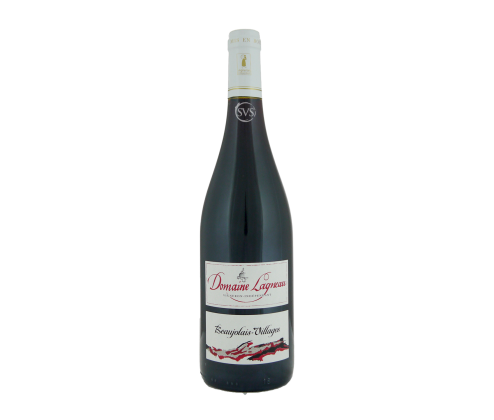
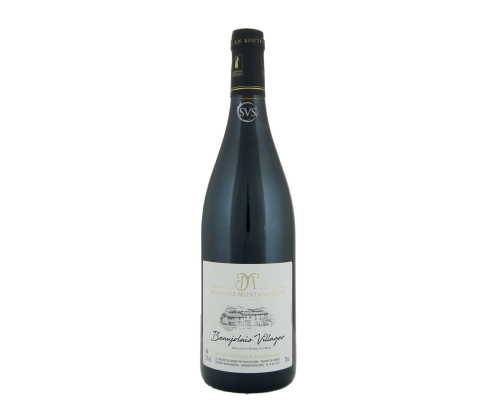
We only offer one (excellent) Beaujolais-Villages: note that there is good land for Gamay outside the Crus, particularly in the north of the Beaujolais-Villages areas around Quincié-en-Beaujolais, Lantignié, and near Chaintre, where the soils are more schistous.
Other wines are from the ten Cru villages, although these only make up about a quarter of all Beaujolais production. The Crus, all appellations in their own right in the north of the Beaujolais region, are the heart and soul of Beaujolais. Among these rolling hills the Gamay grape has a great affinity for the generally pinkish soils of decomposed granite, despite the soil being acidic rather than alkali as generally favoured by vines. The top wines can be aged for several years.
Looking at the estates we buy from two things stand out: first, how small they are, as almost all farm less than 10 hectares, i.e. 25 acres; secondly, how all are family-owned estates, often going back several generations; and thirdly, how most are run by people in their forties and fifties. This is not a region embraced by thrusting young vignerons, introducing unusual grape varieties and experimenting with new winemaking techniques. Rather Beaujolais remains resolutely old-fashioned, making honest wines which are expressive of their heritage (those gnarled vines) and landscape.
Our estates:
Domaine de la Chapelle des Bois, Le Colombier
The Coudert-Appert’s Fleurie is now firmly established as a favourite among our customers. Eric Coudert (former carpenter now local peasant; friendly giant) works in the vineyards and organises the harvest whilst Chantal, née Appert (qualified oenologist, sparky, bright and energetic) controls the winery, sales, and probably Eric too! The winemaking here is very traditional: carbonic maceration, 10 day cuvaison, the wine brought on in large old oak barrels, and bottled with minimal filtration to preserve texture.
There’s no question the name of Fleurie helps its reputation and sales, as Beaujolais is a flowery wine. The vineyards lie on the foothills of the massif, so tend to be well exposed, facing east to south-east. Soils in Fleurie are pale pink, arenitic, and lighter than in most of the crus, perhaps explaining the grace of the wines.
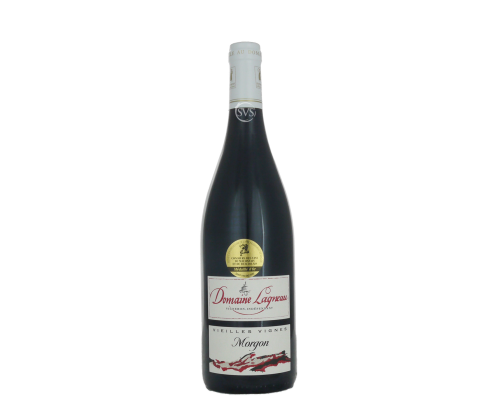
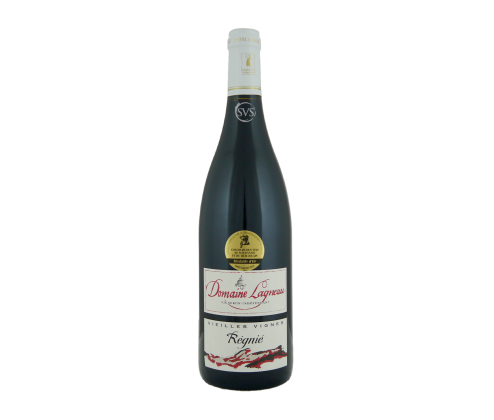
Domaine Lagneau, Quincié en Beaujolais
A typical French family-owned estate, now in the sixth generation of vignerons, with all the benefits that bestows: a sense of tradition, and a priceless inheritance of old vines, which were largely planted either 55 or 100 years ago. Father Gerard is quiet, with a weather-beaten face and broad smile: he prefers to be out among the vines. Tall son Didier has worked in Australia and has returned to help his parents. Madame probably runs the place and keeps them both in order. They really work hard here: the vineyards are grassed and carefully tended, and all their grapes are handpicked, usually later than all their neighbours. Despite this labour and care prices are very reasonable indeed.
The family have five hectares in Beaujolais-Villages, on schist and granite soils in Quincié-en-Beaujolais, generally accepted as the best terroir for Beaujolais-Villages. The Régnié (this is the most recently created of the Crus, raised to appellation status in 1988) comes from 4 hectares of vines on pink sand and clay soils with granite subsoils.
Our Favourite Selection
-
Domaine des Chazelles, Viré-Clessé, Vieilles Vignes, 2010
“From a very sunny, well-exposed site, this has become one of our benchmark wines: lightly (almost undiscernibly) oaked and with an ability to age...”
-
Preignes Le Vieux, Syrah, IGP Pays d’Oc , 2012
“This refined and pure Syrah is new to our list - in style it’s worlds away from an inky Australian example, rather crafted in a light and fragrant...”
-
Summer Staples
“A selection from our Summer list containing two bottles each of 3 whites and 3 reds, six different varieties, with a discount of 10%”
More Info
-
Domaine Depeyre, Côtes du Roussillon Villages Rouge, 2011
“From about 50% Syrah, 25% Grenache and 25% Carignan, grown on black schist vineyards near the village. Youthful, opaque purple. This delivers a...”
-
Château de Putille, Anjou Blanc Sec, 2012
“Ripe pears and a touch of lavender honey on the nose. Attractive weight and rich texture, with bright, pure flavours of pear and melon: a lovely...”
-
Mud House, The Woolshed Vineyard Sauvignon Blanc, Marlborough, 2011
“Sourced from the Woolshed block of Mud House’s Marlborough vineyards in the upper Wairau Valley. The sheltered hillside site and clay soils shape...”
-
Domaine Navarre, Saint-Chinian, Le Laouzil, 2010
“Deep ruby. Ripe and seductive scent of morello cherries. This combines great purity of red fruit with impressive concentration. Lushly textured....”
-
Escarpment, The Edge Pinot Noir, Martinborough, 2011
“In 1998, after building a huge reputation at both Delegats and Martinborough Vineyards, Larry McKenna established Escarpment on 24 hectares of...”
-
Chapin & Landais, Saumur Brut, Le Grand Saumur, 2010
“We continue with this excellent vintage fizz, made from Chenin Blanc (here known as Pineau de Loire) with 10% Chardonnay. Chenin Blanc has excellent...”
-
Chenin Styles
“A selection from our Loire list containing two bottles each of six whites; 1 sparkling, 2 dry, 1 medium and 2 sweet, at a discount of 10%.”
More Info
-
Cennatoio, Innominato, Toscana Rosso, IGT, 2010
“The “nameless” wine is a blend of 70% Sangiovese and 15% of each of Cabernet Sauvignon and Merlot. Soft purple. Aromas of red fruit and cloves....”
-
Apaltagua, Envero, Gran Reserva Carmenère, Apalta Vineyard Selection, Colchagua, 2010
“The hillside slopes of the Apalta valley, a sub-region of Chile’s warm Colchagua Valley is a superb terroir for red grapes, notably Carmenère....”